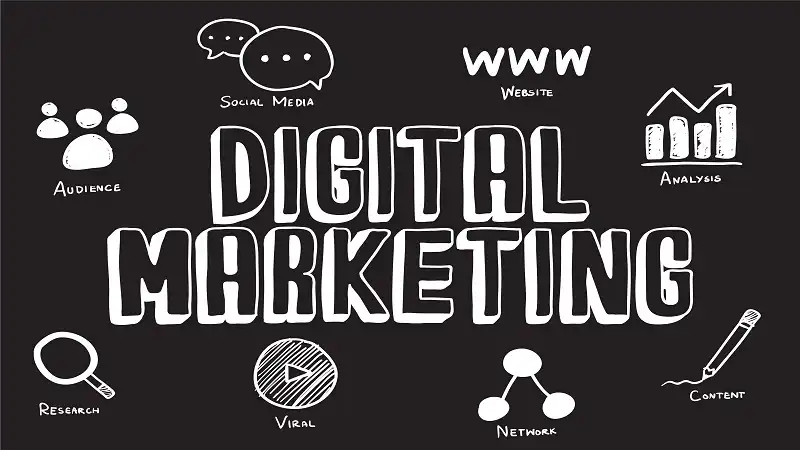
In today’s interconnected world businesses don’t turn to print ads or billboards which were the main tools of the past. Now they are into digital marketing a live and data based approach which uses the internet and electronic devices to reach out to and interact with customers. What is digital marketing and why has it become a requirement for present day businesses? Let’s look.
What Is Digital Marketing?
Digital marketing is the use of the internet and digital tools to bring out products, services, or brands. It includes all of a company’s efforts which put to use the web and electronic devices like search engines, social media, email, and websites to reach present and future customers.
Digital marketing is what we do online. It allows companies to go after very specific audiences, see how we are doing in real time, and improve campaigns for better results which is a feature that traditional marketing does not have.
Key Components of Digital Marketing
To get a full grasp of digital marketing it is best to look at its main components:
1. SEO.
SEO is a process of improving your website’s performance which results in higher rankings in search engine results pages (SERPs). We aim to increase organic (non-paid) traffic. SEO includes:.
Keyword research
On-page optimization (titles, meta descriptions, content)
Link building
Technical SEO (site speed, mobile optimization)
Tip: Use resources like Google Search Console and Ahrefs to track your SEO performance and find out what improvements to make.
2. Marketing Content.
Content marketing is about to produce which is useful, pertinent, and very consistent in order to get in touch with and keep a definite audience of yours. Examples are:.
Blog posts
Infographics
E-books and whitepapers
Videos and podcasts
Actionable Insight: Publish at a regular rate of content which answers your audience’s question and aligns with what they are searching for.
3. Online Advertising through social platforms.
Platforms which include Facebook, Instagram, LinkedIn, TikTok, and X (former Twitter) see also businesses which they connect with their audiences and put forward their brands. We see in social media marketing a way for companies to raise brand awareness, bring in more traffic, and get more leads.
Pro Tip: Focus in on engagement that goes beyond follower count. Post interactively and respond to comments to grow your community.
4. E-Mail Marketing.
Email is still the preeminent digital marketing channel. We use it to nurture leads, share out updates, and to get conversions with targeted messages.
Example: Send out targeted email newsletters which are divided by user interest or purchase history to see an increase in open and engagement rates.
5. Pay per Click (PPC) Advertising.
PPC which is Pay Per Click advertising includes you paying a fee for each click that is received on your ad. Popular platforms are Google Ads, Bing Ads, and social media ads. What PPC does is provide instant visibility and measurable results.
Quick Tip: PPC and SEO together to increase your online presence — short term and long term.
6. Affiliate and Influence Marketing.
Affiliate marketing has partners which are rewarded when they bring in traffic or sales to your business, in parallel influencer marketing works with social media personalities to push products. Also they depend on trust and audience fit.
7. Analysis and Data.
Digital marketing is driven by data. We use tools like Google Analytics and Meta Insights which in turn help you to measure campaign performance, see into what your audience does, and base your decisions in the field of data.
Why Digital Marketing Matters
Digital marketing offers numerous benefits:
Global reach: Reach out to global audiences.
Cost-effective: Lower priced as compared to traditional advertising.
Measurable results: Track your results as they happen.
Personalization: Tailor to user behavior and preferences.
Flexibility: Adopt to change fast with data in mind.
In a nutshell digital marketing helps businesses to stay relevant, competitive, and customer focused in an ever changing digital world.
Getting Started with Digital Marketing
For beginners in digital marketing here is a simple guide:
Identify what you are after Awareness, leads, or sales?
Who is your audience? What are you trying to reach?
Choose what you want to use SEO, social media, email etc.
Develop a content strategy consistent, useful, and optimized.
Track and improve use analytics for continuous optimization.
Conclusion
Digital marketing isn’t just a trend it is a powerful tool which helps companies connect with, engage and grow in the digital world. Through use of SEO, content, social media, email, and analytics. We are able to put together experiences which see real results.As a small business owner or marketing professional know that which digital marketing is and how it plays out is key to your success in 2025 and beyond.